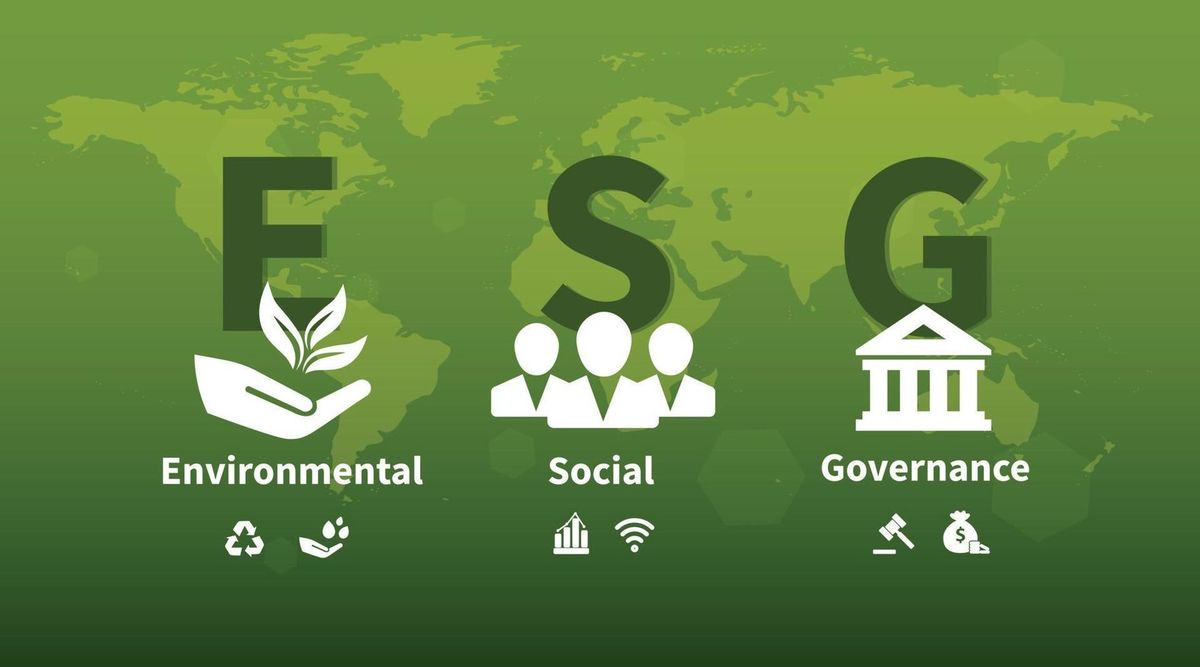
What is ESG?
ESG stands for Environmental, Social, and Governance — three broad
pillars used to evaluate how an organisation manages risks and
opportunities that extend beyond conventional financial metrics. These
three dimensions collectively reflect a company's sustainability,
ethical conduct, and resilience.
ESG data helps in investment decisions, regulatory compliance, risk
management, and building trust.
Startup ESG Requirements
Environmental
Why it is required:
Even at an early stage, tracking energy consumption establishes a
carbon baseline. Investors and accelerators increasingly request this
as evidence of environmental awareness. It also helps identify
cost-saving opportunities in office or infrastructure operations.
Why it is required:
Demonstrates whether the startup is making proactive choices to reduce
its carbon intensity. Relevant for green finance applications and
ESG-aligned funding rounds, particularly from impact investors.
Why it is required:
Diesel generators are a direct source of Scope 1 emissions. Knowing
whether they are used — and how frequently — is critical for any
preliminary carbon footprint calculation, especially in regions with
unreliable power grids.
Why it is required:
Technology and hardware companies generate electronic waste as part of
regular operations. Tracking formal disposal demonstrates compliance
with India's E-Waste Management Rules and responsible handling of
hazardous materials.
Why it is required:
Identifies physical climate risk exposure. Relevant for insurance,
business continuity planning, and investor risk assessment. Startups
operating in vulnerable geographies must disclose this to help
stakeholders understand operational resilience.
Why it is required:
While carbon credit trading is more advanced for larger organisations,
startups with a mission to address climate change may already engage
with voluntary carbon markets. Tracking this establishes credibility
and positions the company for future carbon market participation.
Social
Why it is required:
Diversity at the workforce level is a critical social metric even for
small organisations. Investors, particularly those aligned with
Diversity, Equity, and Inclusion (DEI) mandates, evaluate this data
early. It also signals organisational culture and values.
Why it is required:
Startups often rely on contract workers, delivery partners, or
outsourced services. Ensuring that these workers receive minimum wage
and operate in safe conditions protects the company from labour law
violations and reputational damage.
Why it is required:
A social metric reflecting internal ESG culture. Conducting sessions
on carbon awareness demonstrates a company's commitment to building
ESG knowledge among employees, which is especially relevant for
startups with a sustainability-aligned mission.
Why it is required:
Even at an early stage, having documented policies for physical safety
and mental health signals organisational maturity. It reduces
liability exposure and is increasingly expected by talent, investors,
and incubators.
Governance
Why it is required:
Board diversity is a core governance metric. Having an independent or
diverse board member prevents excessive founder concentration,
improves decision-making quality, and is often a requirement for grant
applications and institutional funding.
Why it is required:
Demonstrates that the organisation has baseline ethical safeguards in
place. Anti-corruption policies are required for compliance with
Indian laws and are scrutinised by institutional investors, large
corporate clients, and accelerator programmes.
Why it is required:
The Digital Personal Data Protection Act 2023 creates new obligations
for how companies collect, process, and store personal data. Even
startups handling user or employee data must be compliant to avoid
penalties and maintain stakeholder trust.
Why it is required:
Extending ESG standards into the supply chain — even informally —
signals governance maturity. For startups seeking B2B contracts or
CSR-aligned partnerships, demonstrating supplier accountability is
increasingly expected.
Work Travel and Value Chain
Why it is required:
Business travel contributes to Scope 3 emissions. Tracking frequency —
even in a binary or qualitative sense — helps startups understand the
emissions associated with their operations and supports early Scope 3
accounting.
Why it is required:
This metric captures whether the organisation is actively reducing its
commute-related environmental footprint. It also reflects social
policy — supporting sustainable commuting is part of an
employee-focused culture.
Why it is required:
Remote work reduces office energy consumption, commute emissions, and
physical infrastructure costs. Tracking this percentage provides
insight into the company's environmental footprint and its approach to
flexible work.
Mission Alignment
Why it is required:
Relevant for startups with an environmental or climate-tech mission.
This data point assesses impact measurement — whether the company’s
product, service, or campaigns are generating measurable public
awareness or behaviour change related to carbon.
Why it is required:
Relevant for startups operating in the carbon credit ecosystem.
Demonstrates alignment with the Make in India initiative and local
technology development, which can support access to government grants,
regulatory advantages, and national carbon trading schemes.
Environmental
Why it is required:
This normalised metric shows how efficiently the organisation uses
energy relative to its economic output. It allows meaningful
comparisons across reporting periods and against industry benchmarks,
which is critical for ESG-focused investors.
Why it is required:
Reflects the organisation's progress in transitioning to clean energy.
As scale-ups grow their physical infrastructure, the renewable share
becomes a key decarbonisation indicator and a differentiator for
low-carbon procurement programmes.
Why it is required:
Tracks whether the organisation is purchasing Renewable Energy
Certificates (RECs) or other instruments to offset non-renewable
consumption. This is relevant for Scope 2 reporting and demonstrates
market engagement with India's green energy ecosystem.
Why it is required:
Scope 1 covers direct greenhouse gas emissions from company-owned or
controlled operations — including fuel combustion and company
vehicles. This is a mandatory input for any structured carbon
accounting framework and lays the foundation for net-zero target
setting.
Why it is required:
Scope 2 covers indirect emissions from purchased electricity and heat.
Tracking this alongside energy usage enables organisations to
calculate their full operational carbon footprint and assess the
impact of renewable energy procurement decisions.
Why it is required:
Water is increasingly recognised as a constrained resource. Tracking
withdrawal volumes is necessary for water-intensive industries and is
required for compliance with India's environmental regulations. It
also supports water risk assessment in climate-vulnerable regions.
Why it is required:
Demonstrates environmental responsibility in water management.
Compliance with India's wastewater treatment norms requires tracking
and reporting, and this metric is evaluated by ESG rating agencies.
Why it is required:
Governed by India's Plastic Waste Management Rules, this data point is
required for regulatory compliance and for demonstrating the
organisation's approach to circular economy principles. Increasingly
scrutinised by corporate buyers and ESG auditors.
Why it is required:
India's E-Waste Management Rules require producers and bulk consumers
to report e-waste generation. Accurate data supports compliance,
Extended Producer Responsibility obligations, and responsible disposal
tracking.
Why it is required:
Governed by Hazardous Waste Rules, this metric is legally mandated for
organisations generating hazardous waste. Non-compliance carries
significant regulatory and reputational risk.
Why it is required:
Demonstrates commitment to waste reduction and circular economy
practices. A higher recycling percentage reduces landfill contribution
and aligns with sustainability goals.
Social
Why it is required:
Measures disparity in compensation between male and female employees.
Disclosure is expected by investors, employees, and regulators as a
key accountability measure.
Why it is required:
Tracks diversity at decision-making levels. Higher representation is
linked to better performance and required under ESG frameworks.
Why it is required:
A critical safety metric measuring work-related injuries. Used
globally to assess workplace safety risk.
Why it is required:
Improves employee wellbeing, reduces attrition, and signals strong
organisational culture.
Why it is required:
Ensures compliance with labour laws and reduces supply chain risks.
Why it is required:
Demonstrates compliance with India's POSH Act and ensures a safe
workplace environment.
Governance
Why it is required:
Signals ESG is a strategic priority and improves accountability and
investor confidence.
Why it is required:
Required by law to report data breaches within 72 hours, ensuring
strong data governance.
Why it is required:
Measures ethical compliance awareness and reduces corruption risk.
Why it is required:
Ensures ethical practices across the supply chain and strengthens
governance standards.
Scope 3 Travel Emissions
Why it is required:
Major contributor to Scope 3 emissions. Required for setting
science-based climate targets.
Why it is required:
Helps report a complete emission profile and encourages lower-carbon
travel options.
Why it is required:
Covers logistics and commuting emissions, often underreported but
significant.
Why it is required:
Reflects commitment to sustainable commuting and reduces Scope 3
emissions.
Environmental
Why it is required:
Full greenhouse gas accounting across all three scopes is required
under BRSR, GRI Standards, and Science Based Targets initiative (SBTi)
frameworks. Scope 3 is the most complex, covering upstream and
downstream value chain emissions, and often represents over 70% of a
company's total footprint.
Why it is required:
Incomplete Scope 3 reporting is a common gap in ESG disclosures.
Tracking the percentage of value chain covered ensures transparency
about data completeness and guides efforts to improve supply chain
emissions data quality over time.
Why it is required:
The European Union's Carbon Border Adjustment Mechanism (CBAM) imposes
a carbon cost on imported goods from sectors like steel, aluminium,
cement, and chemicals. Enterprises exporting to EU markets must
calculate and report embedded emissions per consignment to determine
their CBAM liability.
Why it is required:
Large enterprises must not only report renewable energy share but also
disclose the mechanism — Power Purchase Agreements (PPAs), open
access, RECs, or on-site generation. This level of detail is required
by institutional investors and ESG rating agencies.
Why it is required:
PUE measures how efficiently a data centre uses energy — specifically,
how much of the total energy consumed is used by computing equipment
versus cooling and infrastructure. A PUE of 1.0 is perfectly
efficient. This metric is critical for technology-intensive
enterprises to demonstrate operational energy efficiency.
Why it is required:
A normalised water intensity metric that enables benchmarking across
reporting periods and peer comparison. Water scarcity is an escalating
risk in India, and this metric is monitored by ESG frameworks such as
CDP Water Security and BRSR.
Why it is required:
Enterprises are expected to report these metrics against India's
Extended Producer Responsibility (EPR) targets and circular economy
commitments. Full tracking and third-party verification is expected at
this level.
Social
Why it is required:
Enterprises must report both the gender pay gap and the median
employee wage in INR per month. These metrics are required under BRSR
and enable assessment of internal pay equity. Median wage also helps
evaluate whether the company's lowest-paid employees are adequately
compensated relative to industry norms.
Why it is required:
Unlike scale-ups that may report a single LTIFR, enterprises must
disaggregate safety data by employee type. This ensures that the often
higher risks faced by contract workers — who are sometimes excluded
from safety reporting — are fully visible and addressed.
Why it is required:
Enterprises with extensive supply chains face significant exposure to
social risk in the value chain. Auditing vendors for child labour and
minimum wage compliance is required under the UN Guiding Principles on
Business and Human Rights and is expected by global institutional
investors.
Why it is required:
Under India's Companies Act 2013, companies meeting certain financial
thresholds must spend at least 2% of average net profit on Corporate
Social Responsibility activities. Reporting CSR expenditure and
beneficiary reach is a legal obligation and a key social impact
metric.
Governance
Why it is required:
At the enterprise level, the board must be capable of receiving and
acting on a data breach notification within 72 hours, as required by
the DPDP Act 2023. This requires a formal incident response
infrastructure, documented protocols, and board-level digital
literacy.
Why it is required:
With large volumes of customer and employee personal data, enterprises
must demonstrate robust digital consent management — enabling
individuals to grant, withdraw, and manage consent for data
processing. This is a central requirement of the DPDP Act 2023.
Why it is required:
Enterprises are expected to disclose whether their ESG data has been
independently verified, and at what level — limited assurance or
reasonable assurance. External assurance significantly enhances the
credibility of ESG disclosures.
Why it is required:
Transparency in political donations and lobbying activities is a
governance expectation. Large enterprises are scrutinised for
potential conflicts of interest between political spending and stated
public positions on issues like climate policy.
Carbon Market Data
Why it is required:
India's Carbon Credit Trading Scheme creates a regulated domestic
carbon market. Enterprises must participate and report their position
as buyers or sellers of carbon credits.
Why it is required:
Accurate reporting of carbon credit transactions is necessary for
compliance, verification of net emission claims, and demonstrating
active carbon management to investors and regulators.
Why it is required:
Science Based Targets initiative requires enterprises to set emissions
reduction targets aligned with 1.5°C pathways. Public disclosure
creates accountability and signals strategic commitment.
Why it is required:
Tracking and publicly disclosing progress towards emissions targets is
the most direct measure of real-world ESG performance and is closely
scrutinised by investors and regulators.